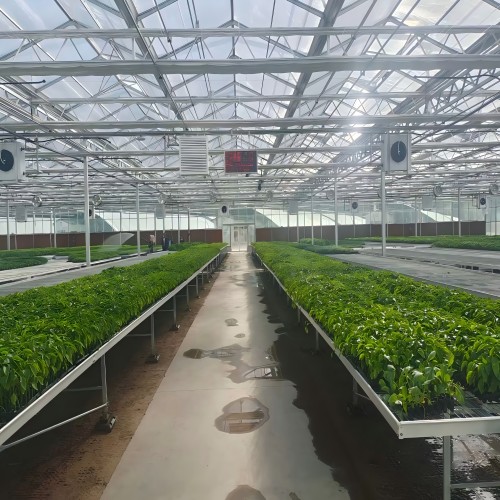
1. Optimized Greenhouse Structural Design
The structural design of a greenhouse directly affects its energy consumption. Scientific design can effectively reduce energy usage:
Optimal Orientation: Greenhouses should ideally face south to maximize natural sunlight and reduce the need for artificial lighting. Additionally, a well-designed roof slope can enhance solar radiation efficiency.
Double or Multi-Layer Glass: Using double or multi-layer insulated glass filled with inert gases (e.g., argon) significantly improves thermal insulation, reducing heat loss.
Structural Efficiency: Lightweight yet sturdy materials should be used to minimize support structures, increase light transmission, and avoid unnecessary shading.
2. Intelligent Environmental Control Systems
Smart environmental control systems use sensors and automated devices to monitor and adjust temperature, humidity, light, and CO₂ levels in real time, enabling precise management:
Temperature Control: Automated shade nets or thermal curtains can regulate solar heat gain during the day and prevent heat loss at night. Geothermal or air-source heat pumps can also be used for efficient heating and cooling.
Humidity Control: Intelligent ventilation and humidification/dehumidification systems maintain optimal humidity levels, reducing energy waste from excessive ventilation or humidification.
Light Management: LED grow lights provide crop-specific wavelengths while supplementing natural light, minimizing electricity consumption.

3. Renewable Energy Integration
Utilizing renewable energy is a key strategy for reducing greenhouse energy consumption:
Solar Power: Photovoltaic panels installed on greenhouse roofs convert sunlight into electricity for lighting, heating, and irrigation.
Geothermal Energy: Ground-source heat pumps leverage stable underground temperatures to provide consistent heating and cooling.
Wind Energy: In wind-rich areas, small-scale wind turbines can supply clean energy.
4. Heat Recovery and Energy Storage
Waste heat and cooling energy can be reused through recovery and storage technologies:
Heat Recovery: Heat exchangers in heating systems capture waste heat from exhaust air to preheat incoming air.
Energy Storage: Phase-change materials (PCMs) or water-based thermal storage systems store excess heat during the day for nighttime use, maintaining stable temperatures.
5. Water-Saving Irrigation Techniques
Efficient irrigation reduces both water and energy consumption:
Drip and Micro-Sprinkler Irrigation: These systems deliver water and nutrients directly to plant roots, minimizing evaporation and runoff.
Rainwater Harvesting: Collecting and storing rainwater for irrigation reduces reliance on municipal water.
Water Recycling: Filtering and reusing irrigation drainage conserves resources.
6. Shading and Insulation Technologies
Shading and insulation are critical for energy efficiency:
Shade Nets: Reduce solar heat gain in summer, lowering cooling demands.
Thermal Curtains: Retain heat at night or in winter, reducing heating needs.
Reflective Materials: Enhance light distribution on walls or floors, decreasing supplemental lighting requirements.
7. Crop Management and Planting Optimization
Smart crop management indirectly reduces energy use:
Climate-Adapted Crops: Selecting locally suited varieties minimizes environmental control needs.
Vertical Farming: Maximizes space efficiency, increasing yield per unit area and lowering energy per product.
Crop Rotation/Intercropping: Maintains soil health, reducing irrigation and fertilization frequency.
8. Data Analytics and Optimization
Big data and AI optimize greenhouse operations:
Energy Monitoring: Identifies high-consumption areas for improvement.
Predictive Models: Weather and growth data forecast environmental changes, allowing preemptive adjustments.
Remote Control: IoT-enabled systems enhance management efficiency.
Conclusion:
Energy-saving technologies for multi-span glass greenhouses span structural design, environmental control, renewable energy, water management, and more. By integrating these methods, greenhouses can significantly cut energy use, boost resource efficiency, and lessen environmental impact. As technology advances, further innovations will drive sustainable agricultural development.