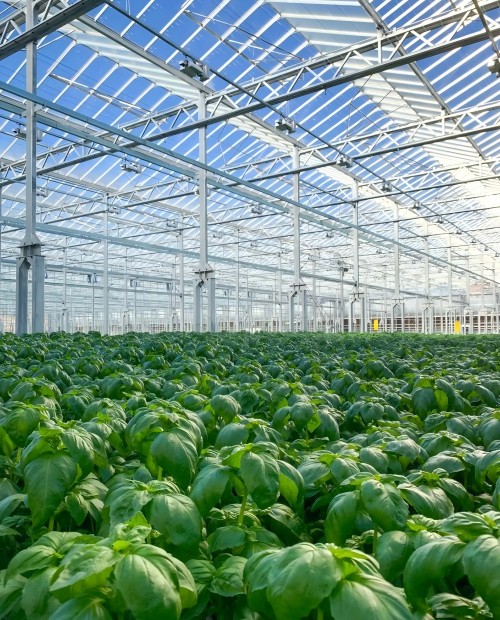
A multi-span glass greenhouse is a modern agricultural facility that provides a stable growth environment for plants through scientific design and advanced technologies, enabling year-round cultivation. Below, we explore how these greenhouses achieve this goal by examining their structural design, environmental control, crop management, and technological innovations.
1. Structural Design:
The structural design of multi-span glass greenhouses forms the foundation for year-round cultivation. These greenhouses typically adopt a multi-span layout, where multiple greenhouse units are connected via shared walls or support structures. This design improves land-use efficiency while reducing energy consumption.
-
Framework: The main structure is constructed from high-strength steel or aluminum alloy, offering excellent resistance to wind and snow.
-
Glazing: High-transparency glass or polycarbonate panels are used as covering materials, ensuring optimal sunlight penetration while providing insulation.
-
Ventilation & Shading: Roof vents or skylights facilitate natural airflow, and retractable shading systems protect plants from excessive heat in summer.
-
Insulation: Double-layered walls with thermal insulation fillings enhance heat retention in colder seasons.
2. Environmental Control Technologies
Precise control of the internal environment is critical for year-round production. Modern multi-span greenhouses employ smart climate control systems to monitor and adjust:
-
Temperature:
-
Winter: Heating systems (e.g., underfloor heating, hot-water circulation, or air heaters) maintain warmth.
-
Summer: Cooling systems (e.g., evaporative cooling pads, misting systems, or shade nets) reduce temperatures.
-
-
Humidity: Humidifiers, dehumidifiers, and optimized ventilation prevent excess moisture and disease.
-
Light: Supplemental LED grow lights compensate for low natural light in winter, while shade nets mitigate intense sunlight in summer.
-
CO₂ Concentration: CO₂ generators or external supply systems boost photosynthesis efficiency.
3. Crop Management
Scientific cultivation practices ensure consistent yields:
-
Soilless Cultivation: Hydroponics, aeroponics, or substrate-based systems deliver balanced nutrition and minimize soil-borne pests.
-
Crop Rotation & Intercropping: These methods optimize space, prevent nutrient depletion, and reduce pest cycles.
-
Fertigation Systems: Automated water-fertilizer integration improves resource efficiency and reduces waste.
-
Pest Control: Integrated Pest Management (IPM) combines physical (e.g., insect nets), biological (e.g., predator insects), and minimal chemical interventions.
4. Technological Innovations
Emerging technologies further enhance productivity:
-
IoT (Internet of Things): Real-time monitoring of environmental data and crop health via centralized control systems enables remote management.
-
AI & Big Data: Machine learning analyzes growth patterns, predicts pest outbreaks, and optimizes planting strategies.
-
Vertical Farming: Multi-tiered or suspended planting systems maximize space utilization and yield per unit area.
5. Economic & Sustainable Benefits
-
Profitability: Year-round production bypasses seasonal limitations, increasing farmers’ income.
-
Sustainability: Reduced water/energy consumption, lower pesticide use, and closed-loop systems (e.g., waste recycling) align with eco-friendly agriculture.
Conclusion:
Multi-span glass greenhouses achieve year-round cultivation through optimized design, intelligent climate control, precision farming, and cutting-edge technologies. They represent a transformative approach to modern agriculture—boosting efficiency, profitability, and environmental resilience. As technology advances, their role in global food security will continue to expand.