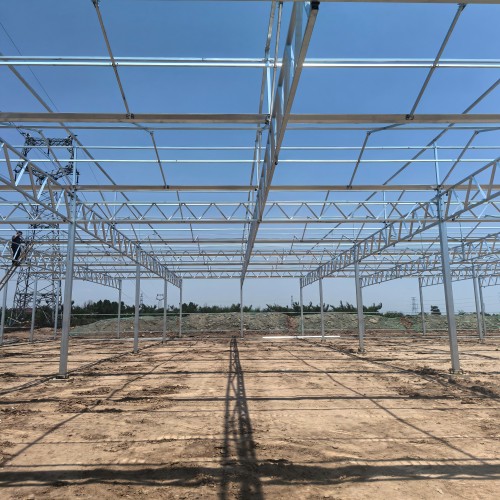
Selecting the right steel pipe is critical for greenhouse building. While many assume thicker pipes are more durable, this isn’t always true. Overly thick pipes can inflate costs, reduce structural flexibility, and even cause unintended issues. Here’s a detailed analysis:
1. The Real Relationship Between Pipe Thickness and Greenhouse Performance
① Load-Bearing & Wind Resistance: Thickness Isn’t the Only Factor
Pipe thickness affects snow/load capacity and wind resistance, but structural design (span, arch shape, column spacing) and steel grade (e.g., Q195B, Q235B) matter more.
Example: In snowy regions with spans >12m, adding internal columns is better than just thickening pipes to prevent deformation.
Example: For typhoon-prone areas, reinforce supports and anchors rather than relying solely on thicker pipes.
② Corrosion Resistance: Zinc Coating > Pipe Thickness
Hot-dip galvanizing (60–85μm zinc layer per Chinese standards) determines longevity, not pipe thickness.
A 2.0mm pipe with proper zinc coating lasts 10+ years, while a 3.0mm pipe with poor coating may rust quickly.
③ Cost & Construction: The Downsides of Thickness
Material cost: +15–20% for every 0.5mm increase (e.g., upgrading from 2.0mm to 2.5mm may cost thousands more per acre).
Installation: Thicker pipes are heavier, harder to bend/weld, and may require stronger foundations.
2. Recommended Pipe Thickness by Scenario
① Standard Greenhouses (Vegetables/Flowers)
Span ≤8m: 1.5–2.0mm (hot-dip galvanized).
Span 8–12m: 2.0mm + additional columns for mid-span support.
② Harsh Environments
High humidity (e.g., aquaculture): 2.0mm + enhanced ventilation to reduce condensation.
Heavy snow (≥30cm): 2.5mm + columns ≤3m apart + diagonal bracing.
③ Temporary Greenhouses (1–2 years)
Use 1.2–1.5mm pipes but ensure proper zinc coating to avoid premature rust.
3. More Critical Than Thickness: What to Prioritize
① Steel Grade & Galvanizing Method
Choose Q235B+ steel (avoid low-quality "recycled steel").
Hot-dip > Electro-galvanizing: 3–5x longer lifespan in salt spray tests.
② Functional Design Considerations
For greenhouses with motorized curtains/solar panels, calculate load requirements; thicker pipes may need reinforced joints.
4. Conclusion: "Right Thickness" = Fit-for-Purpose + Cost-Effective
Greenhouse pipe selection balances performance, cost, and environment. For example:
A 10m-span vegetable greenhouse in North China: 2.0mm Q235B hot-dip pipes (zinc ≥60μm) offer 10+ years of service without overspending.
Key Takeaway: Thicker isn’t always better—optimize for your specific needs!