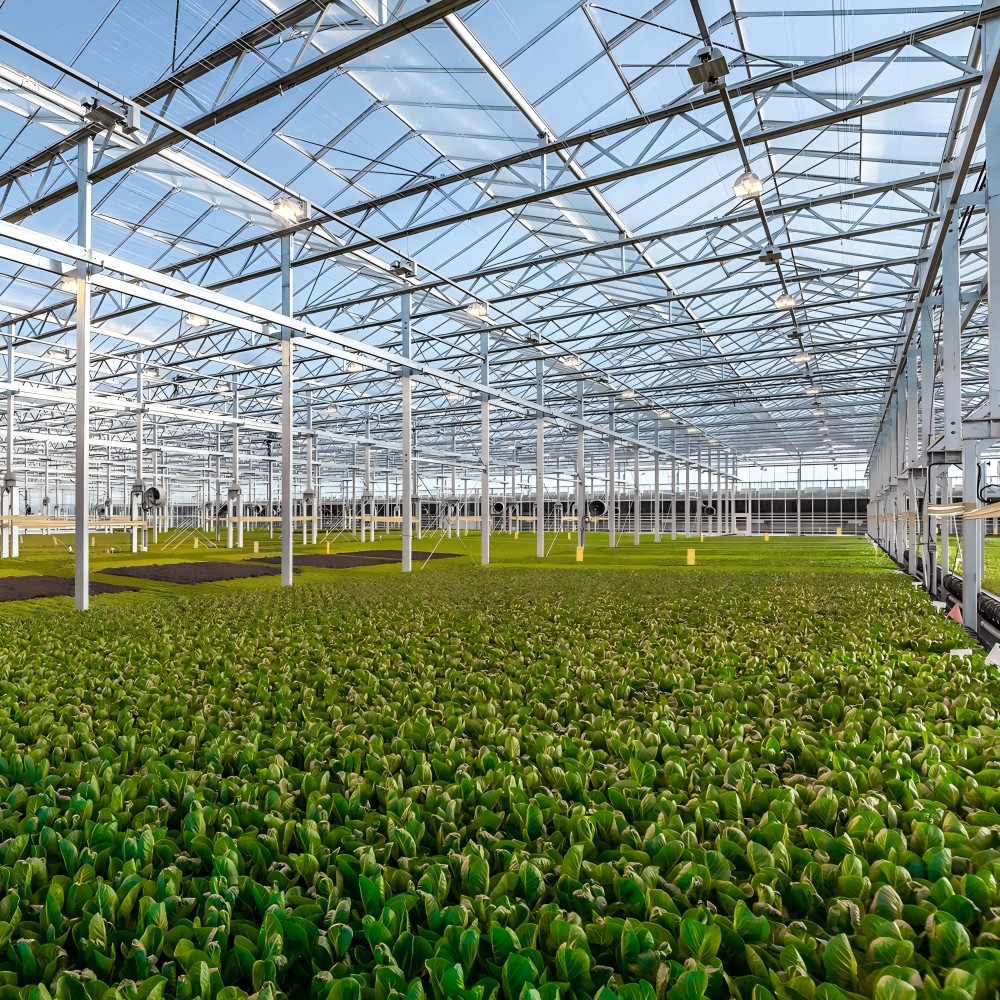
As a measure to support agricultural production, a sprinkler irrigation system mainly consists of a water source, filter, water delivery pipes, and sprinkler heads. Common irrigation methods for greenhouses include drip irrigation and spray irrigation.
Drip Irrigation
This is a technique that delivers pressurized water to the root zone of crops in the form of droplets. Typically, the capillary tubes and emitters are placed on the ground, but the main pipes and emitters can also be buried 30–40 cm underground. The former is called surface drip irrigation, while the latter is called subsurface drip irrigation. The flow rate of each emitter is generally 1–12 L/h.
With drip irrigation, only the root zone of the crops is moistened, while other areas remain dry, reducing surface evaporation and minimizing humidity-related pests and diseases inside the greenhouse.
Micro-Sprinkler Irrigation
This technique moistens the soil by spraying pressurized water. Micro-sprinkler heads come in rotating and refracting types, with a flow rate typically ranging from 20–250 L/h. For crops with higher water demands, such as vegetables, micro-irrigation provides timed, measured, and targeted continuous watering, which is highly beneficial throughout the growing season. It also ensures uniform and aesthetically pleasing produce, improves yield, and increases farmers' income.
Suspended Micro-Sprinkler and Micro-Mist Systems
Micro-sprinkler heads suspended in the upper space of greenhouses include rotating, refracting, and cross-shaped misting types. Water delivery pipes are usually fixed at a height of 2.5–3.5 meters above the ground, with micro-sprinkler heads installed at equal intervals based on the selected spray diameter. Specialized cross-shaped misting micro-sprinklers regulate indoor temperature and humidity more effectively than conventional micro-sprinklers, providing more uniform coverage. This system is primarily used for irrigating taller plants, leafy vegetables, and seedling beds in greenhouses.